博文

目前显示的是标签为“density meter”的博文

Introduce our latest innovation - the RBDM Insertion Fork Density Meter

图片
We're delighted to introduce our latest innovation - the RBDM Insertion Fork Density Meter, a cutting-edge solution designed for unparalleled installation flexibility with continuous, real-time density and concentration measurement in pipelines, bypass loops, and tanks. 🏭💧 Crafted for diverse applications ranging from refined hydrocarbons and mineral slurries to the most challenging corrosive liquids, including acids and alkalis, our RBDM Meter is the epitome of versatility and precision. It ensures seamless inline density and concentration monitoring, thereby significantly enhancing interface detection, concentration control, and blending operations. 🛢️🔬 Key features include: High Precision: With a density accuracy of ±1.0 kg/m3, our meter provides reliable readings, ensuring your operations are based on the most accurate data available. Broad Operating Range: Capable of measuring density within a range of 0-3000 kg/m3 and tolerating temperatures up to 150°C, the RBDM Ins...
What is the difference between a Coriolis mass flow meter and a magnetic flow meter? Explain from the cost performance used in the project.

图片
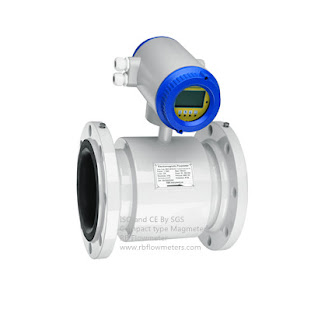
  When considering cost performance in a project, the difference between a Coriolis mass flow meter and a magnetic flow meter can be significant. A mass flow meter typically provides more accurate measurements of mass flow rates, taking into account factors like density and temperature. However, mass flow meters can be more expensive upfront due to their complex design and technology. They are often used in applications where precise mass flow measurements are critical, such as in industries like chemical processing or gas flow measurement. On the other hand, m agnetic flow meters, also known as electromagnetic flow meters or mag meters, are often selected because they are obstruction less, cost-effective, bi-directional, and provide highly accurate volumetric flow measurement. A range of liner materials, electrode options and line sizes accommodate a wide variety of process applications,    like water treatment, wastewater management, and food and beverage production. . ...

RBCM series mass flow meters are widely used in industrial fields

图片
  RBCM series mass flow meters are widely used in industrial fields. It can be used to measure the flow of gas or liquid in a pipeline, and its measurement results are related to the mass of the fluid rather than just considering the volume of the fluid. The following are some of the main applications of mass flow meters in industry: Oil and Gas Industry: Mass flow meters are commonly used in oil and gas extraction, transportation and processing to accurately measure the mass flow of fluids. This helps operators monitor and control fluid supply, changes and usage, ensuring production line safety and efficiency. Chemical industry: Mass flow meters are widely used in chemical processes to measure the flow of liquids or gases at various stages. By monitoring and controlling the mass flow of fluids in real time, product quality and production efficiency can be improved, and the stability and safety of the process can be ensured. Food and Beverage Industry: In food and beverage producti...

RB Flowmeter has updated Coriolis mass flow meter, the pipe size is from DN1 to DN200.

图片
RB Flowmeter has updated Coriolis mass flow meter , the pipe size is from DN1 to DN200 , more information visit www.rbflowmeter.com . Coriolis mass flow meter

Low cost Inline Densitometer/Concentration Meter are available now

图片
Low cost Inline Densitometer/Concentration Meter are available now. More information visit www.rbflowmeters.com .

Flow Meters Market - Water Management, Petrochemical Industries Look for Smart Flow Meters for Improving Process Efficiencies

图片
Press release from:  Transparency Market Research The measurement of liquid or fluid movement is flow measurement. Different types of flow meters are used in measurement of the movement of the fluid. Flow meter is used for measurement of mass, volumetric, linear and non-linear flow rate of fluid and gas. Flow meters consist of a scale, tube, indicator and stop. Moreover, the flow meters’ performance relies on certain factors like pressure, density, temperature and viscosity of the liquid. Most of the flow meters depend on forces produced by the flowing steam to indirectly measure the flow as it overcomes the known condition. But the positive displacement flow meters measure the flow by gathering a fixed volume of liquid then it counts the number of time volume is filled. Flow meters are known by different names like flow indicator, flow gauge, liquid meter and many more http://www.openpr.com/news/712622/Flow-Meters-Market-Water-Management-Petrochemical-Industries-Look-for-Smart-...