博文

目前显示的是标签为“industrial applications”的博文

Which Flow Meter Requires a Conductive Fluid? The Need to Develop Electromagnetic Flow Meters for Low Conductivity ≥1 μS/cm

图片
When selecting a flow meter for industrial or laboratory applications, one critical factor to consider is the conductivity of the fluid being measured. Among the various flow measurement technologies, electromagneticflow meters (EMFs) stand out as devices that *explicitly require a conductive fluid* to operate. But why is conductivity so important, and why is there a growing push to develop EMFs capable of handling fluids with low conductivity ( ≥ 1 μ S/cm)? Let ’ s dive in.  Which Flow Meter Requires a Conductive Fluid?  Electromagnetic flow meters (EMFs) rely on Faraday ’ s Law of Electromagnetic Induction to measure flow. Here ’ s how it works:   1. A magnetic field is generated across the flow tube.   2. As the conductive fluid moves through the field, it generates a voltage proportional to its velocity.   3. Electrodes detect this voltage, which is then translated into a flow rate.     Why conductivity matters:   For this ...

What is the Difference Between an Ultrasonic and Magnetic Flow Meter?

图片
  Flow meters are essential tools for measuring the rate of liquid or gas movement in industrial, commercial, and environmental applications. Among the many types available, ultrasonic and magnetic flow meters are two popular options. While both serve the same fundamental purpose, they operate on different principles and excel in distinct scenarios. Let ’ s break down their differences and compare their use cases.    How They Work   1. Ultrasonic Flow Meters      - Use sound waves (ultrasound) to measure flow velocity.      - Clamp-on models transmit waves through the pipe wall, while inline models have sensors inside the pipe.      - Calculate flow based on the time difference between upstream and downstream sound wave travel.     2. Magnetic Flow Meters (Magmeters)      - Rely on Faraday ’ s Law of Electromagnetic Induction.      - Require conductive fluids (e...

Micro Low Flow Inductive Magmeter: Your Ideal Flow Measurement Solution

图片
 In the realm of industrial flow measurement, the RBEF - E Mini Low Flow Inductive Magmeter stands out as a remarkable device. Here is a detailed introduction to its features and the custom services we offer for equipment suppliers.   I. Product Features  1. Compact and Space-Saving Design  With sizes ranging from DN6 to DN50, our magmeter is extremely compact, making it suitable for installations where space is limited. Its small footprint allows for easy integration into various systems, whether in tight machinery compartments or crowded piping setups.  2. High Precision Measurement  The flowmeter offers an impressive velocity range from 0.01m/s to 10m/s. It achieves an accuracy of ±0.5% of RS (when Velocity > 0.6m/s) or ±3mm/s (when Velocity ≤ 0.6m/s), and a repeatability of 1/3 of the accuracy. This level of precision ensures reliable and accurate flow measurement, crucial for processes that demand strict control over fluid flow rates....

RBEF-E Miniature Magnetic Flowmeter: Your Ideal Choice for Diverse Wastewater Treatment Scenarios!

图片
 In the ever-evolving landscape of wastewater treatment, the RBEF-E Miniature Magnetic Flowmeter proves to be an invaluable asset, catering to a wide array of applications.  Municipal Wastewater Treatment Plants  Primary Sedimentation Stage  Before sewage enters the primary settling tank, precise dosing of flocculants is essential to coagulate suspended solids. Our RBEF-E, with its remarkable ±0.25% accuracy, adeptly controls the flow of flocculants, smoothly adapting to daily fluctuations in municipal sewage flow and quality. This ensures optimal flocculation, eliminating both wastage and insufficient dosing of chemicals, thus facilitating efficient sedimentation and separation of suspended matter.  Biological Treatment Unit  When it's time to supply vital nutrients like nitrogen and phosphorus to the microbial communities in activated sludge or biofilm processes, the RBEF-E takes center stage. Capable of detecting ultra-low flow velocities as low as 0.01 ...

# 📢 Unlocking Precision with RBEF Ceramic Electromagnetic Flow Meters!

图片
 👋 Professionals in the industrial realm! Today, let's spotlight the game-changing RBEF Ceramic Electromagnetic Flow Meters that are redefining fluid management.  🛠️ Technical Specifications That Impress : Operating on Faraday’s law of electromagnetic induction, these meters precisely measure flow by correlating induced voltage with fluid velocity, adhering to the principle $UE ∞ B * D * v$.  Their ceramic measuring tubes feature a conical design, optimized for smooth fluid passage. With flange options ranging from DN15 - 600 and wafer connections from DN15 - 200, installation flexibility is a given. Handling pressures up to 9.8 bar and temperatures spanning from -40 °C to 180 °C, they're built to endure diverse industrial conditions. Flow velocities can range from 0.25 m/s to 12 m/s, all while maintaining accuracy levels of 0.5% or an even more precise 0.25% with 3-point calibration.  💪 ** Outstanding Material Features **:  The ceramic liner steals the ...

6Unwavering Precision: Electromagnetic Flow Meters in Complex Fluid Environments

图片
  In the industrial landscape where accuracy and reliability are the cornerstones of seamless operations, electromagnetic flow meters have emerged as the go-to solution for measuring fluids laden with bubbles or solid particles. Their stability under such challenging conditions is nothing short of remarkable. Keywords: Electromagnetic Flow Meters, Fluid Stability, Industrial Applications, Bubble Tolerance, Particle Resistance When dealing with bubble-infused fluids, like the frothy mixtures in fermentation processes of breweries or the carbonated streams in beverage production, electromagnetic flow meters maintain their composure. Thanks to the advanced sensor technology that operates on Faraday’s electromagnetic induction principle, they can isolate the signals from the liquid phase despite the presence of gas bubbles. This means breweries can precisely measure the flow of wort or additives, ensuring each batch of beer has the perfect blend and consistency. A local craft brewery w...

# Electromagnetic Flow Meters: Unveiling the Pros and Cons

图片
In the industrial flow measurement realm, electromagnetic flow meters have carved out a significant niche. But like any technology, they come with their own set of strengths and limitations. Let's take a closer look.  ## Keywords: Electromagnetic Flow Meters, Flow Measurement , Advantages, Disadvantages, Industrial Applications   The Impressive Advantages   High Precision :  Electromagnetic flow meters are renowned for their accuracy, typically boasting an error rate within ±0.5% to ±1%. This makes them the go-to choice in industries like chemical, pharmaceutical, and food processing, where exact measurements are crucial for quality control and recipe formulation.  Non-Contact Measurement : Employing a non-intrusive approach, they cause zero pressure loss to the fluid stream. This not only preserves the fluid's flow characteristics but also minimizes equipment wear and tear, reducing long-term maintenance costs.  Wide Measuring Range : With an impressive ...

RB Flowmeter's Clamp - on Ultrasonic Flow Sensor for medical and Bio-pharmaceutical industries

图片
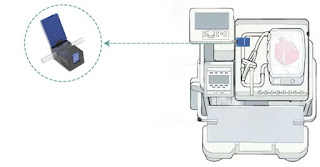
In the contemporary industrial panorama, precise flow measurement constitutes a pivotal factor. RB Flowmeter's clamp - on ultrasonic flow sensor adeptly addresses this exigency.  This sensor features a non - invasive design, thereby obviating cross - contamination risks. In medical applications, for instance, during dialysis procedures in renowned hospitals like the Mayo Clinic, it accurately monitors the flow of dialysis fluid without any contact, safeguarding patient health. In the bio-pharmaceutical realm, during the production of monoclonal antibodies at industry leaders such as Genentech, this design ensures the sterility of the process.  In scenarios such as drug formulation and chemical synthesis, its high - precision measurement capability is indispensable. In a pharmaceutical plant producing insulin, like Novo Nor disk, the sensor precisely controls the flow of raw materials to ensure the correct dosage in each batch. In chemical manufacturing of speciality polymers a...

The Marvel of Ceramic Electromagnetic Flowmeters in Industrial Applications

图片
The Marvel of Ceramic Electromagnetic Flowmeters in Industrial Applications  In the realm of industrial measurement and control, ceramic electromagnetic flowmeters have emerged as a remarkable technological innovation. These sophisticated devices play a crucial role in ensuring accurate and reliable flow measurement of conductive liquids, particularly in demanding industrial environments.  Ceramic electromagnetic flowmeters operate on the principle of Faraday's law of electromagnetic induction. When a conductive fluid passes through a magnetic field, an electromotive force is generated. By measuring this induced voltage, the flow rate of the fluid can be precisely determined. The ceramic lining of these flowmeters offers several distinct advantages that set them apart from traditional flow measurement devices.  One of the key advantages of ceramic electromagnetic flowmeters is their exceptional durability. Ceramic is renowned for its hardness and resistance to abrasion, c...