博文

目前显示的是标签为“krohne”的博文

Mastering Slurry Flow: Overcoming Electromagnetic Flowmeter Challenges

图片
Measuring the flow of slurry—whether it’s mining tailings, concrete, or drilling mud—is one of the toughest challenges in industrial instrumentation. While Electromagnetic Flowmeters (EMFs) are the go-to choice for conductive liquids, the abrasive and noisy nature of slurry can turn a standard magmeter into a maintenance nightmare. However, with the right technology and installation, you can achieve reliable, accurate readings. Here is a guide to the common problems engineers face with slurry, and how to solve them.   1. The " Slurry Noise " Problem The Issue: Slurry contains solid particles crashing against the electrodes. This creates massive electrical noise (spikes) on the output signal, making the reading unstable. The Solution: You need a meter with a high-frequency or dual-frequency excitation. Standard DC excitation is too slow; high-frequency excitation "punches through" the noise to get a clean signal.  2. Electrode Coating and Wear The Issue: Sticky slu...

What is the Minimum Conductivity for a Magnetic Flow Meter?

图片
  Magnetic flow meters (magmeters) are widely used to measure the flow rate of conductive fluids in industries such as water treatment, chemical processing , and food production . A key requirement for their operation is the electrical conductivity of the fluid being measured. This raises a critical question:  What is the minimum conductivity required for a magnetic flow meter to function accurately?    How Magnetic Flow Meters Work   Magmeters operate based on Faraday ’ s Law of Electromagnetic Induction. When a conductive fluid flows through a magnetic field generated by the meter ’ s coils, it induces a voltage proportional to the flow velocity. Electrodes mounted in the pipe wall detect this voltage, which is then converted into a flow rate measurement.       Minimum Conductivity Threshold  The minimum conductivity required for reliable operation typically ranges between 5 – 10 microsiemens per centimeter ( μ S/cm). However, t...

What are the different types of magnetic flow meters? Under what working conditions are they applied? What are their respective strengths and weaknesses?

图片
  The different types of magnetic flow meters include insertion and inline flow meters. Insertion meters and low flow(Magnetic Inductive Flow Sensor) are suitable for larger pipe sizes and can be easily installed without disrupting the flow. Inline meters, on the other hand, are more commonly used for smaller pipe sizes and provide higher accuracy. Magnetic flow meters(Magmeter) are typically applied in industries where the fluid being measured is conductive, such as water treatment, chemical processing, and food and beverage production. They are ideal for measuring the flow of liquids that may contain solids or abrasives, as they have no moving parts to get clogged or damaged. The strengths of electromagnetic flow meters include their high accuracy, reliability, and ability to measure flow rates of conductive liquids. They are also unaffected by changes in temperature, pressure, or viscosity of the fluid being measured. However, magnetic flow meters may not be suitable for non-con...

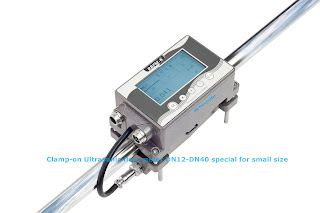
New product- Micro clamp-on ultrasonic flow/heat meter for HVAC, water system, etc. is coming now.

图片
RBFM-K Compact Clamp-on Micro Ultrasonic Flow and Heat Meter is q uick and easy to install, even by non-trained operators,  the clam-shell design of this range makes them a fast and reliable solution for non invasive flow and/or heat measurement applications. As the sensor separation distance is fixed, there is no need for adjustment and once fitted they are not easily disturbed. RBFM-K is special designed for small and micro pipe size.